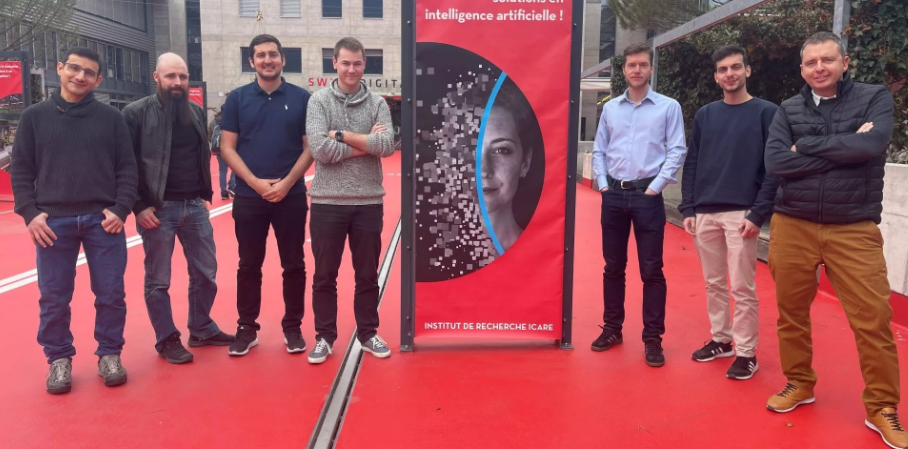
Energy conservation presents a crucial challenge, both environmentally, marked by concerns related to climate change, and economically, particularly for households facing rising inflation and significant increases in electricity costs. This issue has attracted the interest of researchers from the Institute of Computer Science and the Icare Institute, as part of an initiative supported by the Valais Higher Education Department, aimed at fostering collaboration between local research institutes. The objective of this collaboration between the Institute of Computer Science of the School of Management and the Icare Institute is to explore the possibility of achieving energy savings by influencing individual behaviors.
The project aims to promote individual behaviors leading to energy savings and, consequently, a reduction in electricity expenses. To achieve this, a phase of identifying poor consumption habits was undertaken, followed by the proposal of personalized recommendations for energy saving. Data collection devices, such as sensors, were deployed in residences to collect information related to heating, lighting, ventilation, and other environmental parameters. These data were then used to establish energy consumption profiles specific to each apartment, thus providing a basis for individualized recommendations.
The Institute of Computer Science at HES-SO Valais-Wallis developed a data collection and analysis system, with the contribution of former computer science students. For its part, the Icare Institute leveraged its expertise in machine learning to create energy consumption models enabling the recognition of connected electrical appliances, the monitoring of their usage, and the classification of consumption by appliance. These models were also used to detect occupancy patterns in residences, thus facilitating the proposal of targeted recommendations.
To facilitate the adoption of energy-saving behaviors, the Institute of Computer Science designed a mobile application offering residents user-friendly access to their consumption data. This application presents consumption anomalies, trends, comparisons with reference standards, and even provides an estimate of energy expenses in monetary terms. Its gamified aspect, based on a reward system, encourages users to follow the proposed recommendations and to actively engage in reducing their energy consumption.
Furthermore, researchers plan to simplify the data collection infrastructure to reduce costs, while exploring the possibilities of applying this technology to small and medium-sized enterprises (SMEs). Indeed, beyond the savings achieved at the domestic level, SMEs can also benefit from these solutions to reduce their energy expenses. Partnerships with energy providers and businesses are envisioned to raise awareness and support these stakeholders in their transition towards more energy-efficient practices.
In conclusion, this interdisciplinary research project aims to provide practical tools and recommendations to encourage energy-responsible behaviors, both at individual and professional levels, thus contributing to the fight against energy waste and the promotion of more efficient resource utilization.