
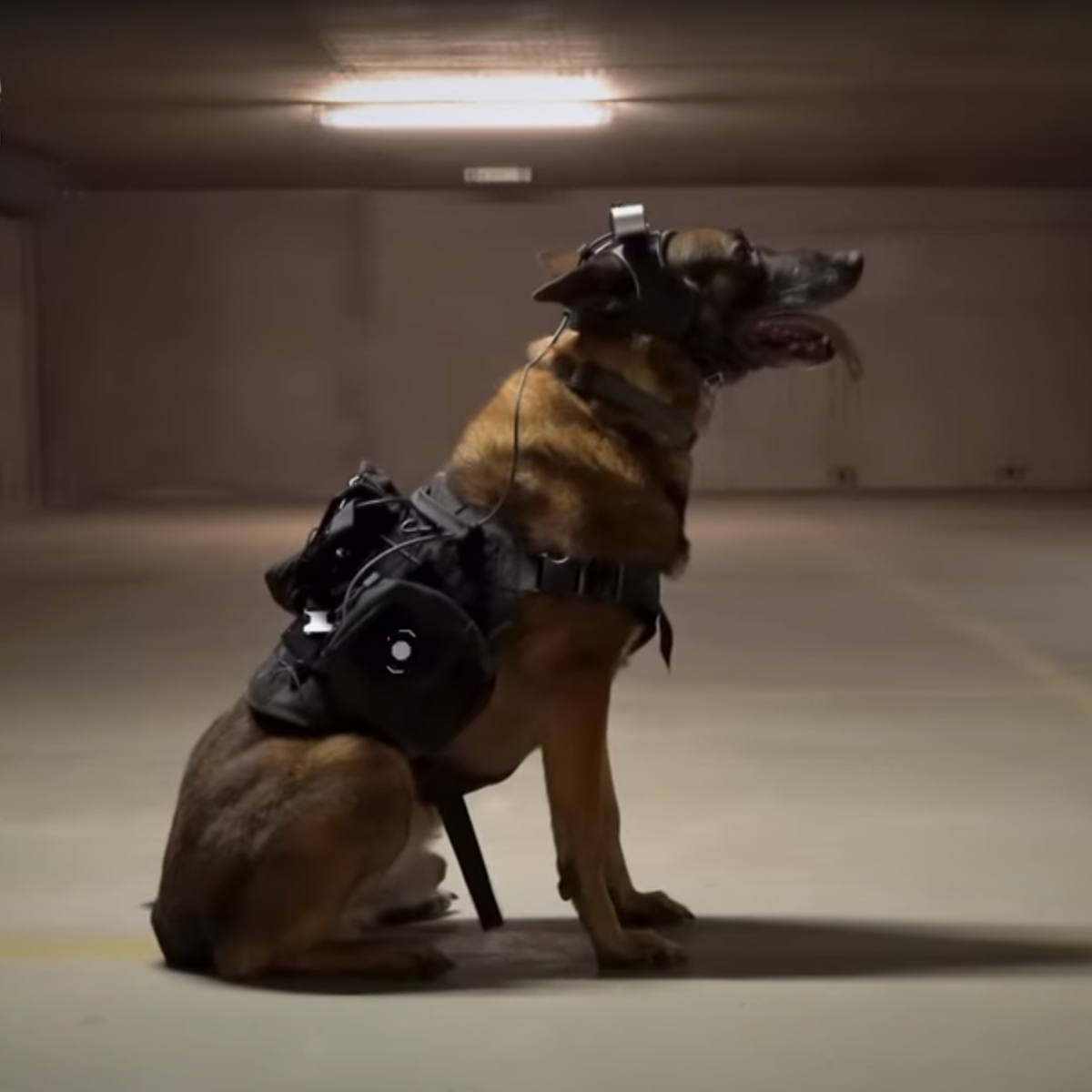
A police canine is a valuable asset for law enforcement. These canines are trained to detect firearms, drugs, and explosives. They can also assist in the search for missing persons or suspects. Police canines are also employed for surveillance and protection, as well as for special missions such as maintaining order and crowd control. Although the utility of these canines is proven, in certain conditions, technological support could enhance their performance, thereby transmitting information more rapidly to the handler for quicker and safer intervention.
The results indicate that the combined use of technology and police canines is functional. The five 15-minute sessions conducted in a controlled laboratory environment demonstrated that the canine could carry the acquisition and computing equipment without hindering its ability to perform its mission. The 3D map data was flattened into 2D to provide a map directly interpretable by operators, which allowed for better visualization of the results obtained.
The experiments demonstrate that the joint use of technology and canines is functional. However, further research is necessary to measure the impact of technology on canine performance in real-world scenarios. Furthermore, the use of additional sensors could improve the accuracy of the data collected by the system.